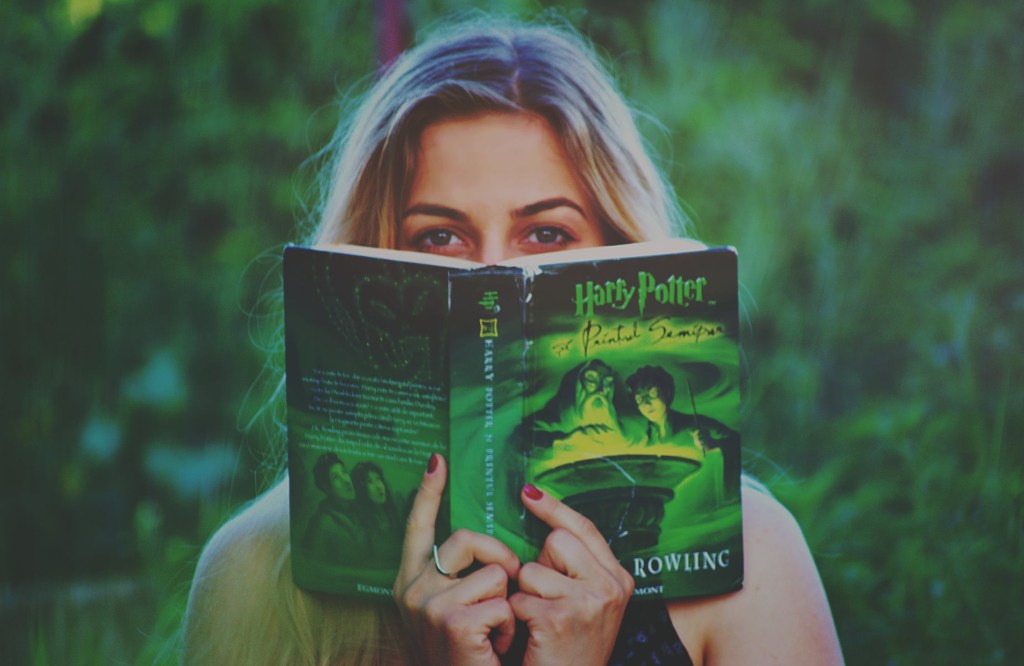
I’ve been reading since approximately age 2. Love of books has been a huge part of my life for as long as I can remember, so much so that it’s pretty much a hallmark of my identity. My father loved reading too, so I suppose he wanted to instill that in me from a very young age. I have hazy but warm memories of him reading classics like “Moby Dick” to me as a child. When I was 4 and about to start kindergarten, I read through the dictionary, because for some reason I thought that was what you were supposed to do! In those days, half-day kindergarten was still a thing (preschool has become what kindergarten used to be). Because I wasn’t going to turn 5 until early October, I was only attending half-days at first. Well, I read through all of the books in the classroom library before my birthday, which I suppose made it clear I was ready for school, so I was switched to full days after that. In elementary school, I was called upon to help other kids learn to read.
As my childhood grew more and more turbulent, and indeed, with my teenage years fraught with unending turmoil too, I turned more and more inward, more and more to books. I preferred to read more than doing anything else. More than just reading, I devoured them, and I frequently reread certain books that were particularly immersive for me. On the surface, one might say I used books as my escape. My grandfather, not known for his powers of observation, quietly commented as much to me once when I was in high school. And sure, that’s true. But the heart of the matter is rather more tragic than that.
Books weren’t my escape, not really; they were the love and assurance I never received from my actual life. I lived a truth stranger than fiction, and thus found comfort in the strangeness of fiction which by comparison was indeed not strange, but rather familiar. To be raised by a narcissist is to operate in survival mode in order to navigate their version of the world to their satisfaction, which means that growing to understand your own world (or the actual world, as it is) becomes extremely secondary. Books were as real as anything else to me, and often more so. A lifetime without actual validation meant that I found what pseudo-validation I could from fictional characters who were suffering through trauma too. In them, I found allies, even friends; their complex and troubled journeys felt akin to mine, and their happy-ish endings gave me strength to keep going day to day, hoping maybe one day I’d find positive resolution too.
It will surely surprise no one that I have a particular affinity for stories about unlikely heroes; my favorite book is “The Hobbit” and I reread it yearly. Over the last couple of years I’ve been making a concerted effort to read more, because time and energy for it had gone a little by the wayside when I had my kid. Specifically, I wanted to try to read more new books (or new-to-me books), instead of frequently going back to old standbys. It’s been going well overall, with help from an app that I can use to track what I’m reading and set goals. Still, there are often times where I can’t help reaching for a well-worn favorite, because I need the comfort.
Some people have emotional support animals. I have emotional support books.
It’s taken me a long time and a lot of work in therapy to get my mind out of books and get used to being fully present in real life. Think of it like stepping into bright sunlight after you’ve been in darkness for a very long time. My eyes are still adjusting. But I’m thankful. Books are part of my DNA at this point, but I no longer need them to survive; now, I get to enjoy books as a way to thrive. It’s not perfect, but it’s definitely progress.
 Journeys in the Dark
One thought on “Stranger than fiction.”