Conflicting emotions cross Thresh’s face. He lowers the rock and points at me, almost accusingly. “Just this one time, I let you go. For the little girl. You and me, we’re even then. No more owed. You understand?”
I nod because I do understand. About owing. About hating it. I understand that if Thresh wins, he’ll have to go back and face a district that has already broken all the rules to thank me, and he is breaking the rules to thank me, too. And I understand that, for the moment, Thresh is not going to smash in my skull.
—from The Hunger Games by Suzanne Collins
Often in my life I have found myself identifying in various ways with the fictional characters whose stories I delved into with abandonment. But rarely have I understood a character’s point of view more completely than I understand Katniss Everdeen.
The Hunger Games book series is one of my all time favorites, which isn’t something I state lightly. I have an inordinate amount of favorites. But these books top the list. I think one main reason I love them so much is that they don’t have clean happy endings. The resolutions are messy and the trauma isn’t buried. It’s an honest representation of such things, I’d say. Katniss isn’t a girl who seeks out fame or attention or publicity or heroics; it’s thrust upon her, much to her chagrin, when all she wants is to save her sister and other people she cares about. She’s endured excessive amounts of trauma already by the time she ends up in the Hunger Games, a pageant-style show where the Capitol selects children from the different districts of Panem and puts them all in an arena to fight each other to the death until a lone victor remains. She lives in one of the poorest districts, where people often die of starvation, and she had almost done so at age eleven, until the baker’s son gave her bread.
Over the course of the book series, there’s this recurring idea of owing, starting with this experience of that gift of bread being a gift she can never repay. In a world where everything is a commodity, and where your life is defined by its worth to others, it’s hard to find a way to trust that someone might help you just because they like you (and therefore that you’re someone worth liking).
It is this idea of owing, a core level of my own understanding of the world around me, which I’d never been able to articulate before I started reading these books and they laid it out for me so well. I never knew a world in which good deeds didn’t have strings attached. Gestures of kindness were not as they seemed; no, they were a matter of favors that required repayment.
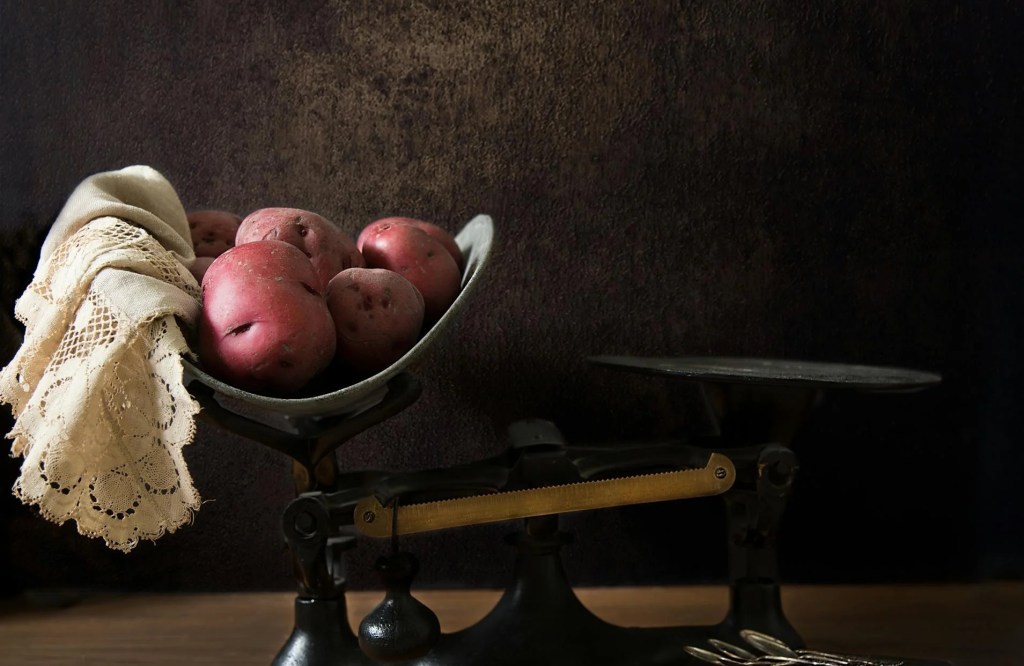
Over the last few months, I’ve been hard at work creating set pieces for our school play, which has been quite a challenging undertaking. I’m not used to working on pieces physically larger than myself, and there were a good many components and logistical challenges to it all. I did absolutely everything I could by myself, because I suck at asking for help. I suck at asking for help, because I don’t know how to reciprocate when I receive help that I need. Historically, keeping those scales in balance has taken form of cooking or baking treats for people, buying gifts, taking more onto my workload, and in some cases, sexual favors. For so much of my life, I’ve only ever understood myself in relation to how I can serve others. I’m scarred from the people who took advantage of that, from the people who taught me that if I don’t “properly” earn my keep or show my gratitude, they’ll be hurt and upset, and they won’t be there for me anymore, or I’ll end up harmed myself. If I owe them and don’t pay my debt, there will be consequences. Over time, I learned to avoid owing, to overcompensate instead and give more and more of myself. The more I gave, the less I owed. (In case you’re keeping track, no, that indeed does not balance the scale at all. None of this part of my psyche is at all logical. I’m a Libra, but a traumatized one.)
So, when I finally had to accept and admit that I needed help to get the set pieces done, and I received that help, I was so grateful. And in turn, my colleague who helped said she was grateful for the opportunity to flex her creative muscles and get artsy, which she doesn’t get to do much anymore, and she really enjoyed it. And then my mind and body went immediately into what I will now call Katniss Everdeen Mode, and worried about how on Earth I could repay her for all the help she’d just given me. I felt like I owed her big time. Even though I’d repeatedly thanked her and she’d repeatedly said she’d loved helping, and we even agreed that next year we could discuss the set plans together to make for a more executable design and such. I’m not alone in this role — and that’s great. Except for the part of my brain that immediately worries about balancing the scales and what it will cost me to ensure I pay back the kindness paid to me. Because in my mind, kindness isn’t free.
My upbringing with my narcissistic mother taught me that kindness is a tool for manipulation. I saw it in how she treated my brother and I vastly differently as children; I saw it in how she handled dynamics between my step-siblings and us when I was a teenager. I saw it in how she treated my friends and I when I was planning my wedding, and how she behaved about so many of those details from start to finish. I saw it in how viciously and despicably she behaved when I tried to establish boundaries between us, and then had to make those boundaries ironclad. I saw it in how she tried threatening to sue for grandparents’ rights to have access to my daughter, one of the most absurd adult temper tantrums I’ve ever witnessed. I still see it in every gift she attempts to send to my daughter who does not know her, gifts that without fail are actually items I would have loved or did love as a child, wordless messages to me that say in the ugliest way that she can still get to me, even if I haven’t spoken to her in seven years.
I don’t know how to trust kindness. I don’t know how to accept help. I don’t know how to believe that people genuinely like me and want me around, unless I continue to prove my worth. I don’t know how to stop feeling like I constantly owe people for letting me exist. My only solution so far, which I’ve come to with some help from my therapist, is that scaling one’s gratitude to the cause is a good place to begin. It’s fine to show appreciation, but that starts with words; I don’t need to spend my last dollar, or stay up until midnight baking cookies, or do other, more nefarious things (the days of that last one are behind me, thankfully). My therapist has also reminded me that I have become very astute at identifying people who would manipulate or take advantage of me, and I rarely engage with such people nowadays. So that’s encouraging. As it turns out, pruning those unsavory people from my life has helped balance out the scales more than anything else.
Owing haunts me; it plagues my bones, as it has Katniss Everdeen’s for most of her fictional life. It’s yet another instinct I am unlearning. No, for me, kindness isn’t free. But I am working on getting to a place where at least it’s got a nice discount. It may never be free for me, but, I do enjoy a good tag sale now and then.
 Journeys in the Dark