My therapist has told me that I’m above average at therapy. I am uniquely suited to actively participating in reflective conversation about myself, learning what it is I need to do to process or improve, and then going ahead and doing that work.
For once in my life, can I not be an overachiever?!
Just kidding. But it is, at face value, a bizarre thing to hear that I’m good at therapy. My therapist did clarify that, out of survival, from a very young age I learned how to read people extremely well, so that part of my hyper-analytical brain that can quickly assess what someone is feeling or what they need is an advanced feature of my development. It’s one of the symptoms of my personal Former Gifted Child Syndrome, so to speak.
The trouble with being (apparently) good at therapy, is that it has only recently occurred to me that not everyone’s therapy is like mine. I have at times been frustrated by trying to encourage some people to “do the work” in their therapy so they can move forward and heal from their trauma, only to be met with great resistance. Of course I understand it’s difficult and scary, absolutely, but, I know it’s worth it. So I’ve been a little baffled as to why staying that stuck would be so preferable. This sounds judgmental, so let me beat you to the punch; I’ve struggled with that too. I never want to judge anyone, it’s coming from a place of wanting healing for people like the healing I’ve found for myself. But it’s put me in a weird, tense place. Let me explain more.
Lately at home, we’ve been watching reruns of “The Big Bang Theory” on television, and the other day an episode came on where one of the characters, Raj, received an award, and the main character Sheldon was dismissive of this achievement because it wasn’t what he considered a big deal. Sheldon’s other friends tried to talk to him about being a more supportive friend and one, Leonard, told him that even if for Sheldon it wouldn’t be a big deal, to Raj, it was; what if this was the biggest achievement Raj would reach? Sheldon admitted he hadn’t thought of it that way, and they all go to meet Raj for dinner. The scene ends with Sheldon saying, “I keep forgetting that other people have limitations.”
Now, I do not think I am like Sheldon very much at all, as his emotional intelligence is quite lacking while I have an overabundance. But his line at the end of that scene has stuck with me. It isn’t that I forget that people have limitations, but rather, I take for granted the intellectual flexes that I’m able to pursue. I forget that I think differently than most people.
I have a theory — maybe it’s a theory regarding neurodivergence — that people are like audiocassette tapes (or, before audiocassettes, I think 8-tracks and vinyl records used the same terms I’m about to). Anyway, the theory is this: most people are what we can call “A-Side People.” They think and act and believe and do in ways that would be considered common, obvious, or typical. None of that is bad, it’s not a judgment! It just is. A-Side People may solve problems in more conventional ways. Meanwhile, “B-Side People” are less conventional, less traditional. They have more unusual or creative ways to make sense of the world around them, right from the jump. B-Side People have different perspectives that A-Side People would never come up with by themselves.
Spoiler alert! I’m a B-Side Person. Shocking, I know. And from time to time, I get too caught up in my B-Side perspective and I lose sight of the fact that not everyone is on the B-Side with me; indeed, most people aren’t. I forget that.
I forget that I think differently from most people.
For someone who believes wholeheartedly in the importance of meeting people where they are (especially students, when it comes to education), this is a really challenging thing to admit and contend with. I am working on it. My therapist offered what was mostly appeasing advisement about this problem by reminding me that the world isn’t built for neurodivergent people. The world isn’t built for people who are different from the white/cis/hetero/et cetera normative structures we’ve been forced to accept as the norm, the standard, the going rate for a successful experience in society.
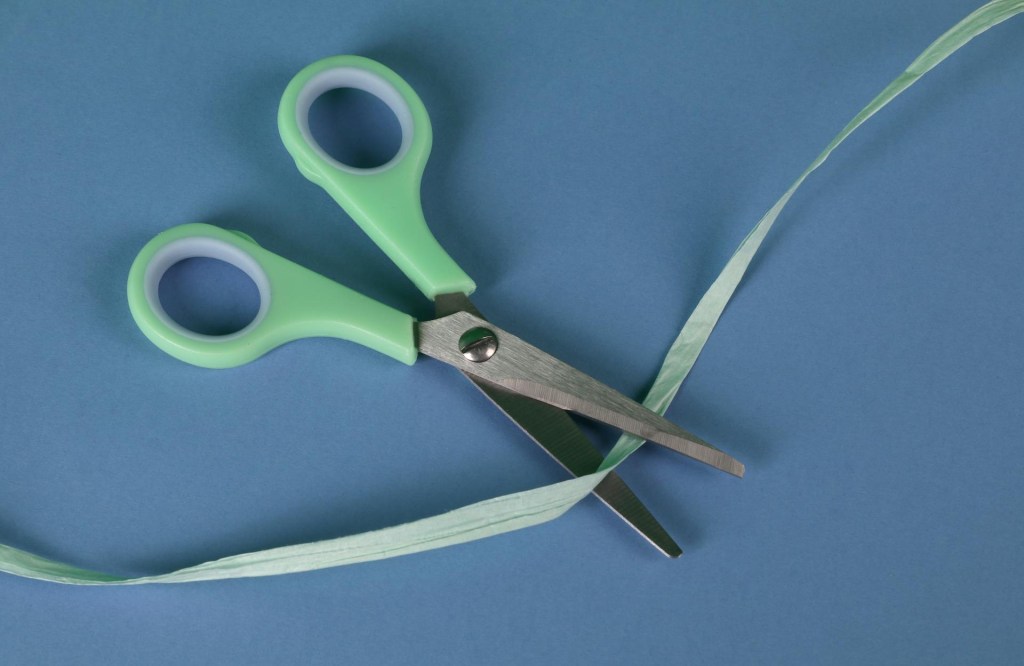
This was a helpful point in that it put blame on society instead of on myself. But it was also rather a bummer. It inspired a long introspective on all the ways that the world is indeed not built for me. For example, I’m left handed. WHY do they make so many awesome coffee mugs with the cute design on one side that you can only see if you’re holding it in your right hand?! What’s with the measuring cups showing the measurement on a side that means I have to awkwardly twist my wrist to see if I’ve poured something out correctly? Why, in so many schools, do we have desks that give you an armrest on the right side of the desk? Where am I supposed to rest my left arm when I’m writing in my spiral bound notebook with the spirals digging into my hand on that left side and the pen ink shmearing all over me? And also, what exactly are left handed scissors? How are they different? Because at this point in my over 37 years of life on Earth, don’t give me any newfangled scissors, I’m used to just using whatever scissors I pick up and making them position well enough on my left hand so I can cut stuff, bearing with the discomfort in order to get it done.
Lefthandedness sounds like a petty example of first world problems. But my therapist says it’s a legitimate type of neurodivergence. The world indeed is not built for left-handed people, that much I can tell you with certainty. Imagine now how it all too often feels for other divergent folk. The LGBTQ+ community; people with disabilities; people of color; non-Christian people. So many more. What have we all had to do? Adapt. We’ve adapted the hell out of our entire lives, just to be able to keep afloat and pray for success in a world not built for us.
Recently during a meeting with my superiors at work, I was commended for how receptive I was to some constructive feedback about things. I joked that they won’t find another employee who’s more skilled than I am at self-awareness and self-critique. Part of that comes from years of therapy that I’m apparently very good at! But I do think more so that it’s a matter of the adaptation my brain has made to be extremely analytical, not least with myself. I’ve always felt like an oddball because of the way I think. But it feels better to think of it as an adaptation that enabled me to survive, one which still serves me well today.
(Seriously, though, can anyone tell me the point of left-handed scissors?!)
 Journeys in the Dark