I’ve known a lot of people in my life who have worn their pain on their sleeves, or worse, weaponized it. People who have decided that they are the way they are because of the trauma they’ve endured, and that those around them will just have to put up with their behavior. I’ve written previously about how my brother has become just such a person, how he has turned his pain into a machine gun, while I’m the one who internalized it like throwing myself on a hand grenade.
Well, if you’re lucky enough to survive throwing yourself on a grenade, you’re going to end up with an awful lot of scarring. And if you wear that scarring like a badge of honor, it’s a more subtle but no less problematic quest for attention and validation.
Survivorhood is complicated. The title of survivor holds undeniable weight, in many (though admittedly not all) contexts. Cancer survivors are (rightfully) lauded; Holocaust survivors are (justly) revered. It means something to be a survivor of painful things, or at least, there’s this sense that surviving painful things ought to mean something. There’s this question of what came out of that trauma that was worth it.
The answer to that question is something most survivors may find it nigh impossible to face. At least, I am certainly struggling with it, so, I’m going to write it down for myself, here and now: the worthwhile thing that came out of all my trauma…was me.
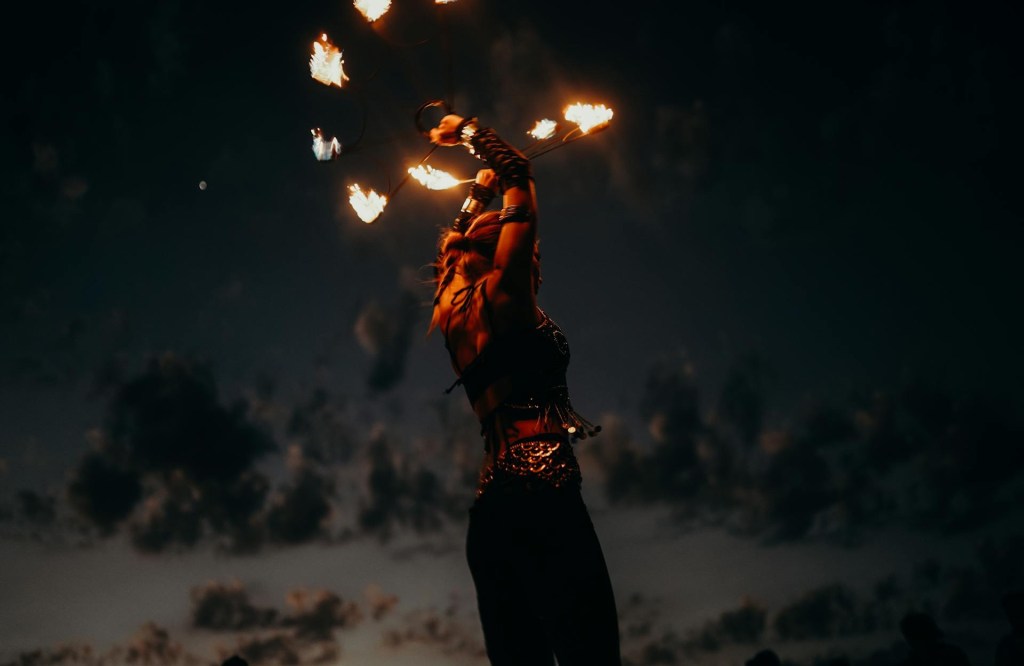
I just had a particularly difficult session with my therapist in which we discussed this, let’s say, misuse of survivorhood. I am absolutely one who has worn my trauma scars like a badge of honor, let my survivorhood become my whole identity. I’ve been, in some ways, proud of how I fought through fire and rose from the ashes; my AOL screenname 20 years ago was phoenixashes88, and in the brief time when I sold makeup as part of an MLM thing I got sucked into about eight years ago, my “company” name was Phoenix Fire Cosmetics. I identified with the phoenix, the creature who bursts into flames and is reborn from the ashes, probably since I learned of it, I assume from books I was reading. I remember selecting that AOL screenname because I had thoughts about how everyone seems to pay attention to the bird on fire but no one wonders what happens to the ashes left behind. Hindsight has a way of making many things seem portentous, which is a bit of an inside-out sentence, but, there it is.
When my therapist asked me who I would be without my trauma, I did not have an answer for her. I drew a blank. The implication is that I’ve defined myself by my pain, which doesn’t feel good. That’s the kind of thing I’ve always wanted to avoid, to be distinct from in comparison to the people I’ve met who inflict their pain on others. While I don’t believe I’ve behaved that way, and certainly never intend to, the impact on myself is undeniable. Maybe what I’m trying to reconcile is the difference between victimhood and survivorhood — the difference between burning up in playing the victim and blazing a trail as a survivor. Whichever side of the coin you flip to, trauma has a way of consuming people, of burning them up like kindling.
Maybe I am not the bird flying in flame; maybe I am the ashes left behind.
I’d never really considered that I was putting my survivorhood on a pedestal, but, I can see how that’s been the case. Once I reached a point with trauma recovery where it wasn’t ruling my day-to-day life, my mind and body still sought familiarity instead of healing. Though no longer dominated by it, pain still made more sense to me than peace. Pain was familiar, and therefore better than the unknown territory of relief. With the way I grew up, leaning into pain was normal. Leaning into pain was how you got the attention or support or validation you wanted. Leaning into pain…it meant survival. Taking pride in one’s pain…well, I learned that one at my mother’s knee, and I’ve been doing it so long I forgot where I inherited it from.
My therapist made a comment about pain being a way of the mind or body telling us something isn’t right, and getting us to pay attention. I disagreed, saying that pain is a way of making us feel human. I’m not saying I was wrong, but I do truly believe that that’s what pain always was to me — a way of making me feel the way I thought I was supposed to feel, be who I thought I was supposed to be. Perhaps it was a way of making me feel anything at all, sometimes.
She then asked me what it would mean if I could enjoy time today, in present day, in my house, free of pain, enjoying peace and calm and quiet, able to just live my life instead of surviving. I told her that sounded totally made up. And I was literally sitting in my own damn living room.
I am tired, oh so tired, of living in survivor mode. But I am learning, slowly, that to get out of it, to get past it, is not a matter of simply recognizing all the trauma that put me there, as if I’m flipping through a stack of old postcards depicting the pain that defined most of my life. I lived through my trauma, yes. But the real badge of honor isn’t surviving through it, or putting up a flashy marquis to announce that I survived it. It’s living, really living, after it’s over. Otherwise, it never feels over, and the phoenix will need to keep bursting into flames, and the ashes left behind will keep piling up.
I’m ready to stop burning.
 Journeys in the Dark