(Fair warning, this post is long and maybe it’s a little meandering, but it does all come together in the end. Much like my life in general, ha.)
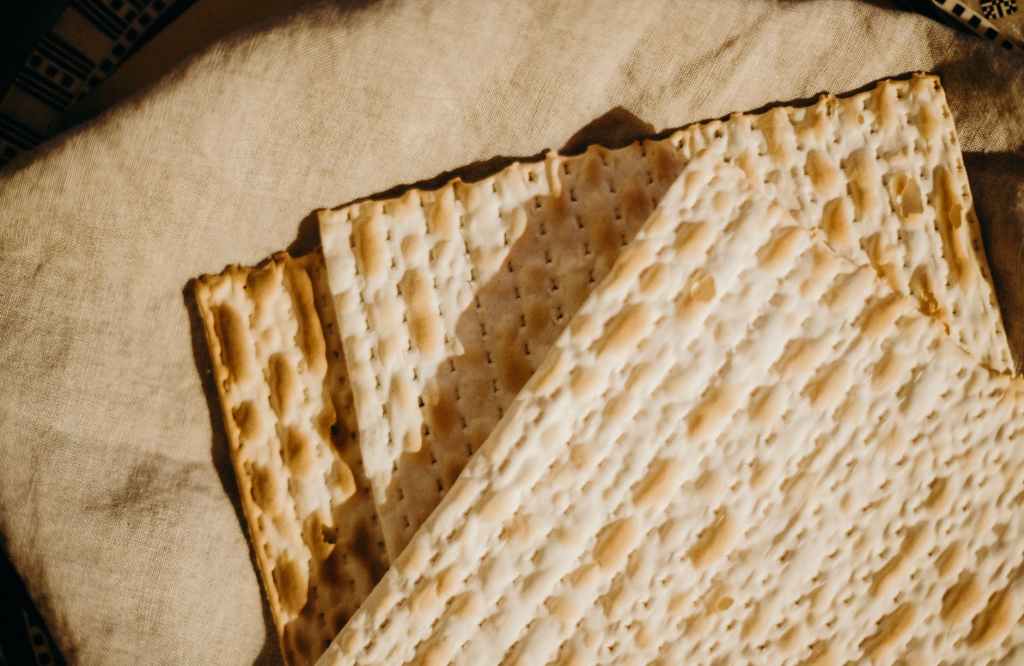
It’s early spring, and this time of year means something really specific for Jews like myself – Passover is coming! For those who don’t know, Passover is the holiday which commemorates our exodus from slavery in Egypt. It’s a lot more complex and drawn out than that, and Jews observe the holiday in a huge myriad of different ways (including not at all for some folks), and I’m not going to parse it all out here. The story is so long that if I tried to thoroughly detail it, I might still be writing this blog post by the time the first seder begins next week! But, I have included some details in this post to help ground the broader mindset I’ve been in here. Hopefully those details provide clarity rather than confounding things. (Here is a resource that details a lot about Passover, and otherwise, I would encourage you to consult with your local Jewish community if you’re curious enough, or, feel free to ask me questions in the comments and I will do my best to answer them.)
So anyway, with the holiday coming up soon, and by nature of my teaching at a Jewish private school, the names Moses, Miriam, and Aaron have been reverberating in my skull for several weeks now, as my students continue to learn and dive deeper into the Passover story. Moses, Miriam, and Aaron are three siblings; Moses, the youngest of the three, was set adrift in a basket on the Nile River by their mother Yocheved, in an attempt to spare him from the terrible fate of Pharaoh’s decree that all Hebrew boy babies be slaughtered (so as to prevent the slaves from growing too numerous and rising up against him). As luck, or G-d’s will, would have it, Moses was discovered among the reeds on the bank by Pharaoh’s daughter and raised in the palace (his name actually means “drawn from the rushes”). He grew to be the deliverer of our people; through him, G-d worked wonders to show His might and to command that Pharaoh let his people go. Interestingly, there is evidence that Moses initially resisted being chosen by G-d, because he was “heavy of mouth and heavy of tongue” (Exodus 4:10), which our rabbinical philosophers deemed to mean that he had a speech impediment. In the end, Miriam and Aaron supported Moses in his role as redeemer of the nation of Israel (though they both went through their own periods of doubt and dissent too).
Passover is a holiday about a whole lot of things, but for me, it’s always been a family story.
When I was in third grade, we had monthly hands-on projects assigned to us that we would complete at home – mostly simple things like completing artwork using a template provided, a pumpkin or a kite or an egg. My father usually helped me with these projects (and often took over, but he so obviously enjoyed it, so it never fazed me). One particular project I remember involved designing our own family crest, and what we (he) ended up completing was a crest that included olive branches, and the main component of the crest was a pattern of alternating thin black and white stripes against a background of brick red. This is purportedly the color scheme that the Midrash describes as the colors of the Tribe of Levi, one of the twelve tribes of Israel (descendants of the twelve sons of Jacob, who was renamed Israel). My father said we were of the Tribe of Levi, and as it happens, Moses, Miriam, and Aaron were descended from Levi. Ergo, we were descended from Moses and his siblings (obviously with countless generations between us).
I never questioned the steadfastness of my father’s Jewish identity; it seemed unquestionable for him, as much a part of him as his grey-blue eyes, and the little gap between his front teeth that I inherited. It was important to him, when he married my mother, that any children they have be raised with Jewish experiences, and we absolutely had that in terms of celebrating holidays with my grandparents, my father’s parents. However, for all that it had seemed important to him, he had often taken a very minimally active role in enriching that exposure for my brother and I. A prime example of this lack of follow-through on his part was the fact that he had gotten a rabbi to proffer a Hebrew name for my brother (which I don’t recall, but the certificate is tucked away somewhere), but that rabbi had apparently passed away before I was born and he had simply never bothered pursuing another avenue to secure a Hebrew name for me. He did, however, often tell me that had they followed through on that, he would have had me named Shaina, which means beautiful. Still, we never went to Hebrew school or even attended any temple services. I never had a bat mitzvah, my brother never had a bar mitzvah. I didn’t think much of what I’d been missing out on until I was in high school, and my parents were divorced by then, but in the end I found my own way to Judaism.
Let’s fast forward to my freshman year of college, during which I was blessed with the remarkable and amazing opportunity to visit Israel on a group trip, via a program called Birthright. During that trip, my peers and I toured many parts of the country and had invaluable experiences; one highlight was that I chose to have a naming ceremony at sunrise atop Mount Masada. I had been told that some Birthright participants who’ve had nontraditional upbringings often can choose to have naming ceremonies while on the trip, and I worked with the trip chaperones to plan that out for myself. They took care of the details with what blessings and logistics were needed, and I decided what I wanted my Hebrew name to be (not sure who had the tougher task there!).
For inspiration, I thought back to what I remembered my father sharing with me, not just about a name for me but about what he understood to be true about our family’s lineage. I thought back to what I knew and understood about Moses, Miriam, and Aaron – namely, that Moses had special needs and his siblings were his support, maybe even his lifeline at times. I found myself relating to Miriam very much in the way that she watched over her brother Moses and helped ensure his safety and survival as an infant, and later helped him as he helped the people of Israel. For my entire life, I had been taking care of my brother who has special needs. In the end, I chose the Hebrew name Shaina Miriam, in deference to multiple facets of what I understood to be my family legacy. Jews use their Hebrew names in a number of prayer practices and other customs. Every time I am called upon as Shaina Miriam, I feel the weight of ancient heritage, and I treasure it as a part of who I am, just as much as my English name.
For years after this process and conclusion, I saw myself as a Miriam-esque figure, and never saw a need to question or reconsider it. My father, whose relationship with me was fraught with years of complication by this time, passed away about three months after I was in Israel, and I don’t remember if I ever got to tell him about the trip or my naming ceremony. I don’t believe I did. For over ten years afterward, my perception of the sibling dynamic between my brother and I remained aligned with my perception of Miriam as Moses’ support system. Now, my relationship with my brother has never been good. We fought like cats and dogs as children a lot of the time, and especially once we were teenagers and then as adults. For many reasons, our relationship has continued to deteriorate, and as of fall 2021, I am not in contact with him, for now, a decision that turned my insides to molten iron even though it was the right decision for me. In other posts on this blog, I have also detailed (at least in part) the incredibly painful decision I made to permanently break contact with my mother who is a toxic narcissist, and unfortunately, the efforts to protect myself from her harm have had to include my breaking connections with many other people I’ve cared about. I’ve had to make impossible choices for years now, for time out of mind.
It was at school recently, during a showing of the animated film “The Prince of Egypt”, of all things, that I gained a startling dose of clarity about those choices.
I love “The Prince of Egypt”, in spite of the inaccuracies it contains (students at school were assigned this film to watch specifically to see how many inaccuracies they could find, and I think the running count was 32 – but that’s not relevant here). For those who haven’t seen it – the movie shares the story of Exodus through the eyes of Moses as he comes to terms with who he is, and how he can no longer maintain his once close relationship with his “brother” Ramses who is determined to destroy his people. That relationship and its deterioration are a huge focus. And I stood there last week, in the middle of my second grade classroom, watching Moses struggle on the screen of my Smartboard with where his allegiance is supposed to lie, facing an impossible choice about family, and it hit me like a ton of bricks.
I’m not Miriam. Or at least, not anymore. It turns out, I’m actually Moses.
So much emphasis is on Moses’ role as prophet, redeemer, reluctant leader. So much attention is placed on his function as a conduit of G-d’s will. But no one ever seems to talk about how difficult it must have been for him to come to terms with who he really was, and the broader implications that held for his past and for his future, and then figure out what to do about it all. No one discusses Moses’ internal conflict, the wrestling and reconciling he had to work through at such a turbulent time. I wonder if anyone who was around Moses at the time offered him consolation and compassion, or if they dismissed his pain in the interest of the end goal, if they told him to suck it up and focus on the greater good.
I don’t know if anyone ever validated Moses’ feelings (much like no one ever validated me, growing up). So I’ll do it here, several millennia later, because it’s better late than never. I see you, man; I see your pain and I know the difficulty you faced. Just because something is the right decision, does not mean it’s easy. Your struggles, inside and out, were understandable and legitimate, and I hope you found peace in your heart when all was said and done.
Chag Pesach Sameach (Happy Passover) to all who celebrate.
 Journeys in the Dark
Nice
LikeLike
Thank you, Diana, for teaching us about Passover. I had just one Jewish friend in the tiny town where I grew up, and we never talked about it. You continue to amaze and inspire me as you share your journey. My heart is with you.
LikeLike